
Future-Readiness
Readiness for the Future
Seven forces are shaping the world your child will grow up in. Here is each one, and what ChildFirst is doing about it, starting in the preschool years.
 I am future-proofed!
Don't underestimate what your child can do to prepare for the future.
Not claims. Real children, before Primary 1.
AI in Action: 3 times National Robotics champions
What to expect from Future-Readiness
To prepare your child for the future, it is first necessary to understand the technological and geopolitical forces that are shaping it. Dr Yen has written about the seven megatrends in full.
The table below summarises them, and shows what ChildFirst is doing to future-proof your child.
Read the article: 7 Megatrends to Future-Proof Your Child →
Human intelligence comes first. The child imagines, creates and decides, and stays in control.
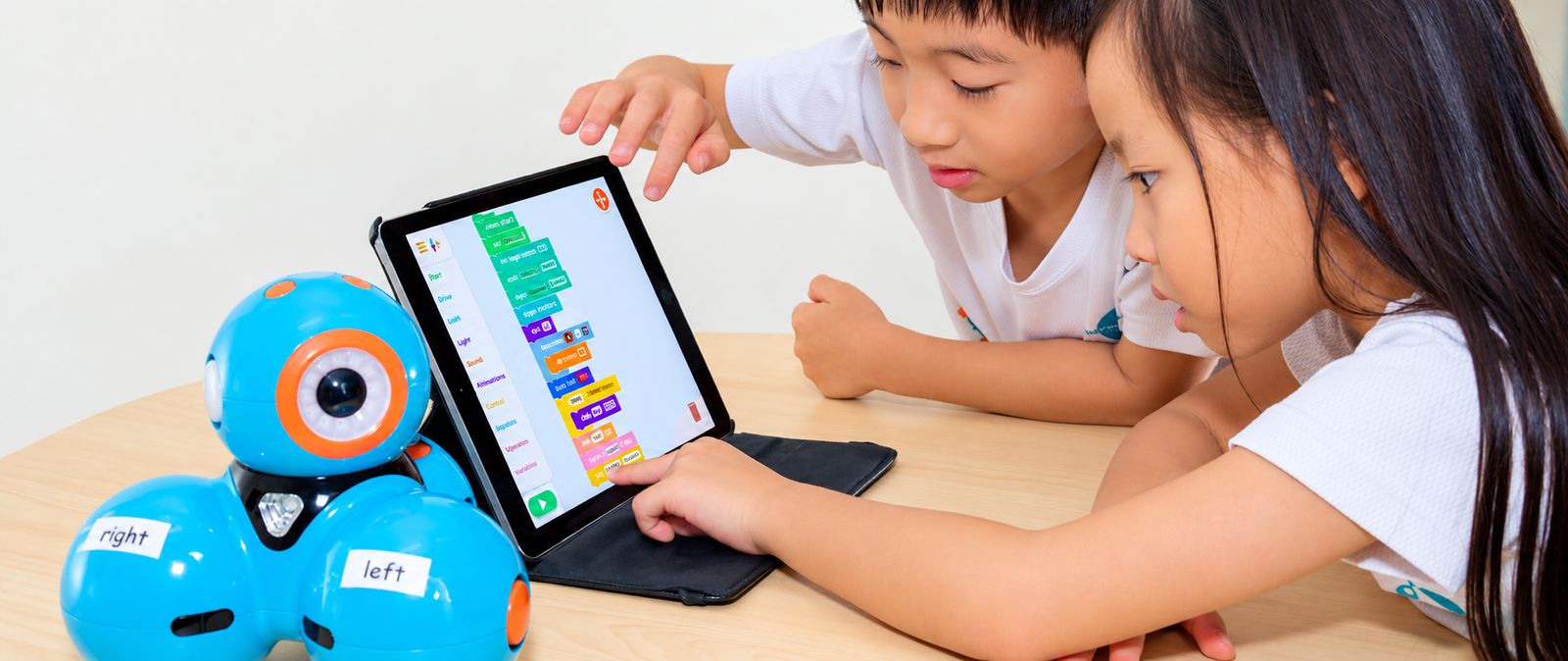
AI as a tutor, a tutee, a tool and across subjects, from age 3. Coding is screen-free at ages 3 and 4, and robots are used from N2, with teachers leading.
How we teach AI →Half of every school day is in Chinese, through songs, stories and play.
K2 children master more than 50% of the Primary 1 Chinese vocabulary before P1.
How we teach Chinese →Children practise starting and finishing their own projects, with innovation as part of iSTEAM.
Why we teach design thinking and entrepreneurship to pre-schoolers →AI can generate, but the child should imagine. Children write and illustrate their own stories, then use AI to bring them to life (Stories made with AI, the SG60 Ice Kachang project).
Preserving children's creativity →AI can suggest, but the child should decide. Character development through classic stories such as the Monkey King, about telling real from false.
How we develop Human Intelligence →Understanding our feelings and caring for others, taught from the early years.
Teachers who know each child by name, and children who learn to collaborate and communicate.
How we develop Human Intelligence →Eight intelligences, including music, art, movement and understanding people, discovered and developed from 2 months to 6 years.
How we develop Multiple Intelligences →The goal is not to prepare children for one predicted future. It is to help them develop the ability to learn, think independently, adapt confidently and make meaningful contributions in many possible futures.
Dr Yen's book: Beyond ABCs, Future-Proof Your Child
By Dr Richard Yen, a Harvard PhD in Physics who left Silicon Valley to build the school for his own children.
What parents say
“The robotics and coding sparked a genuine interest in her, and the opportunities to participate National and International Robotics Competitions were truly unforgettable.”
“The AI-driven Chinese app is cutting-edge, identifying areas for improvement and reinforcing learning through repeated practice.”
“What impresses me is their commitment to embracing the latest AI and EdTech advances to create a tailored learning environment.”
Questions parents ask
Is AI too much for young children?
Human intelligence comes first, and AI joins gradually from age 3. Coding is screen-free at ages 3 and 4, and robots are used from N2, with teachers leading.
Will my child spend a lot of time on screens?
Coding is screen-free at N1 and N2. Screen use for coding starts at K1 with up to 1 hour a week, well below the MOH guideline of 1 hour a day.
What is Tri-Intelligence?
Three intelligences we develop: Human, Multiple and Artificial.
Is coding really a language?
Coding and AI are our third language: the language of technology, not another spoken language.
Is robotics and AI a gimmick?
Three-time Overall Champion at the National Robotics Competition, plus the Science Centre coding certification.
See it for yourself
Come and see a class in action. Planning ahead? Tell us when you would like your child to start, and we will get in touch about 5 to 6 months before.