
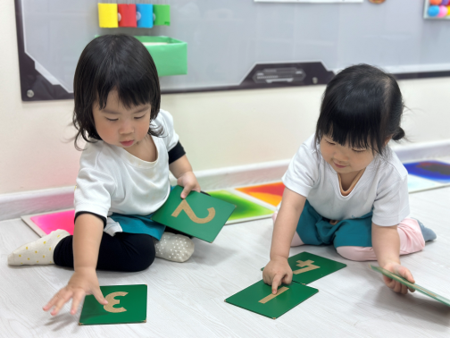
Group routines
Children are gently guided through predictable daily routines and shared activities.
- Group transitions
- Familiar schedules that comfort
Ages 18 months to 3 years
Our trilingual journey starts with two languages: half the day in English, half in Chinese, with teachers who know your child by name. A caring first school where your child grows in confidence and independence.
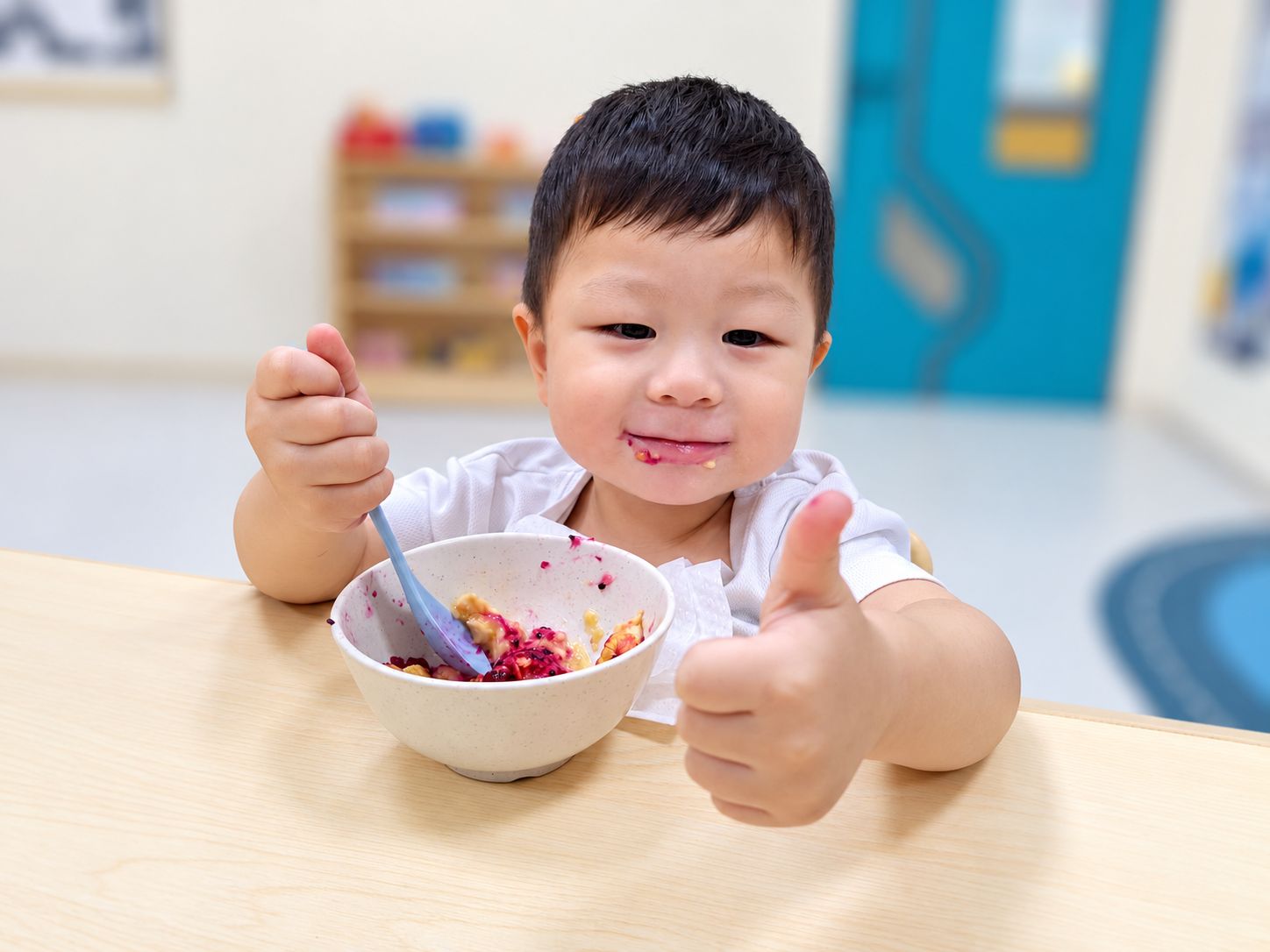 I can do it!
Little steps are big achievements. Toddlers are learning to do things for themselves, to explore and to say what they want, and for many this is the first time away from home and in a group. We help them settle through predictable routines, patient and warm educators and shared activities, and we go at your child's pace, because every child adjusts differently.
Four everyday strands, in age-appropriate ways.
Children are gently guided through predictable daily routines and shared activities.
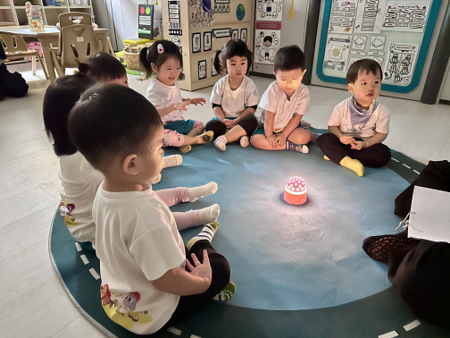
Songs, rhymes, stories and conversations help toddlers express their needs.
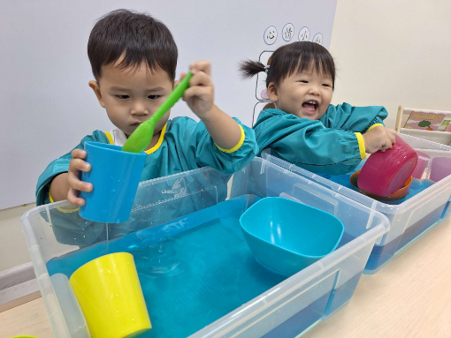
Toddlers learn by touching, moving and discovering cause and effect.
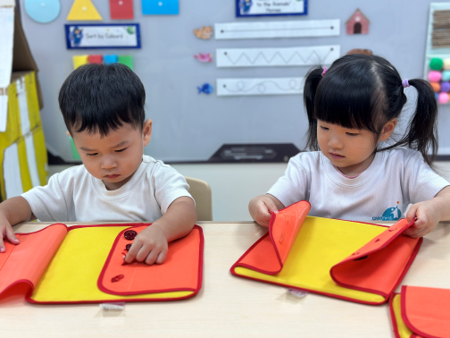
With guidance, children take part in simple routines and tasks.
Good habits start early, in small daily routines.
“A big and clean kitchen that prepare and cook the kids’ daily meals which is not common in preschools.” (Peiyan C., Google review)
The full policy is in the Parents' Handbook.
11:45 am to 2:00 pm, in their own classroom.
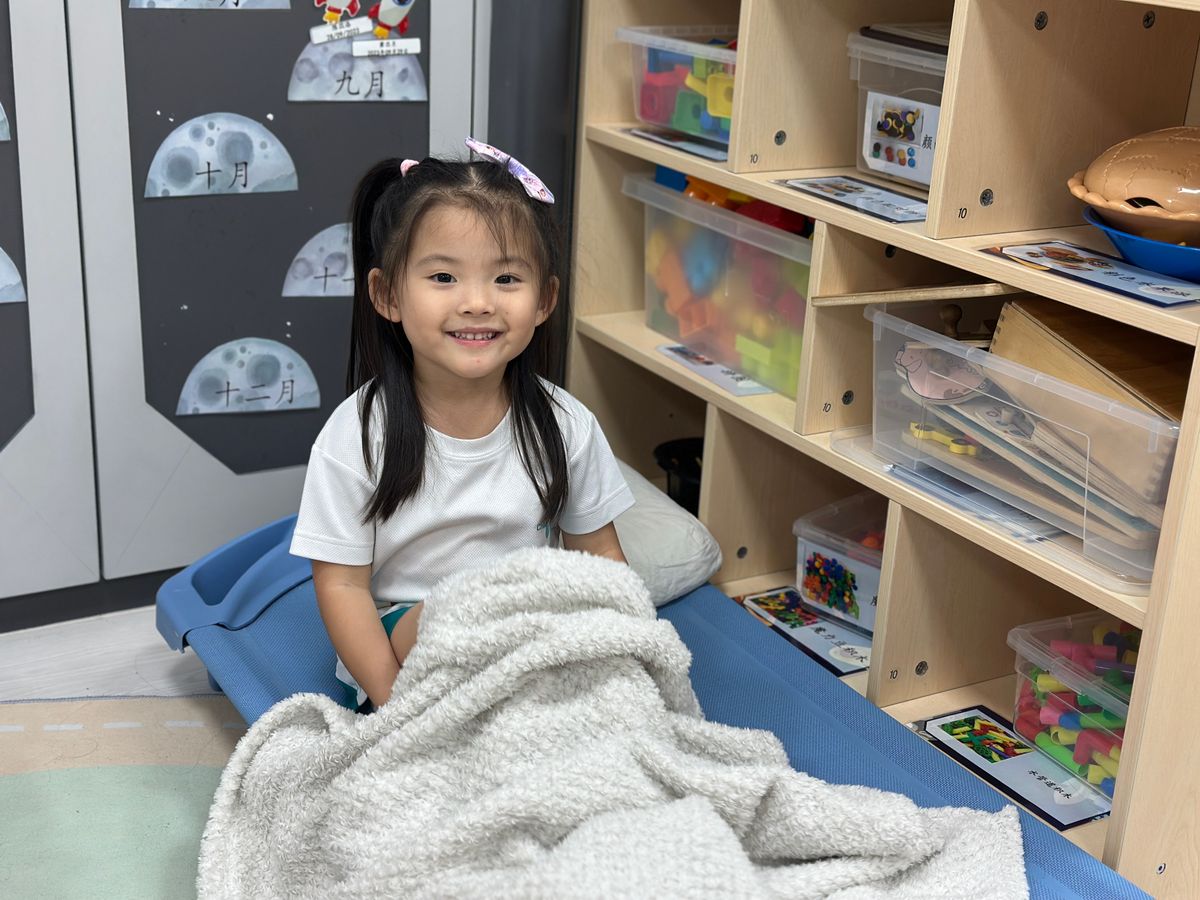
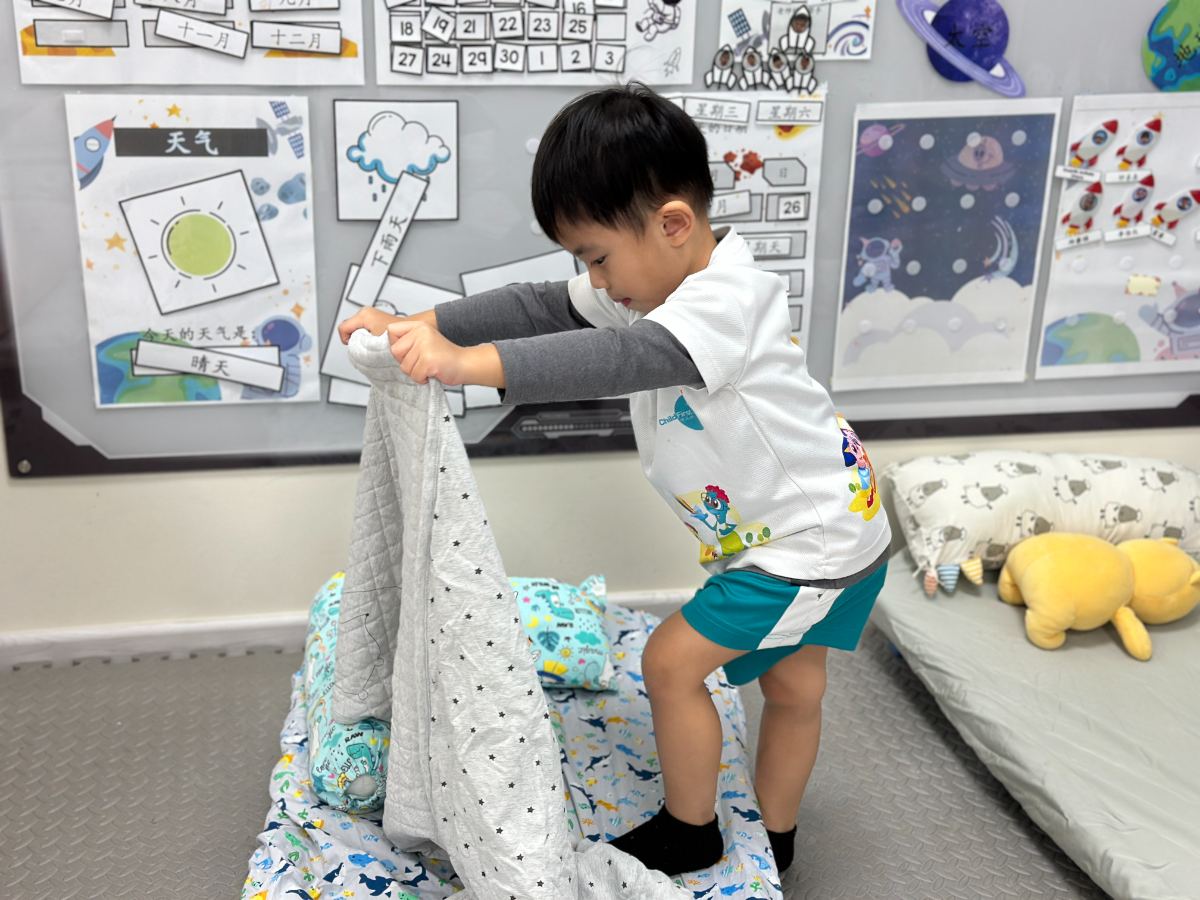
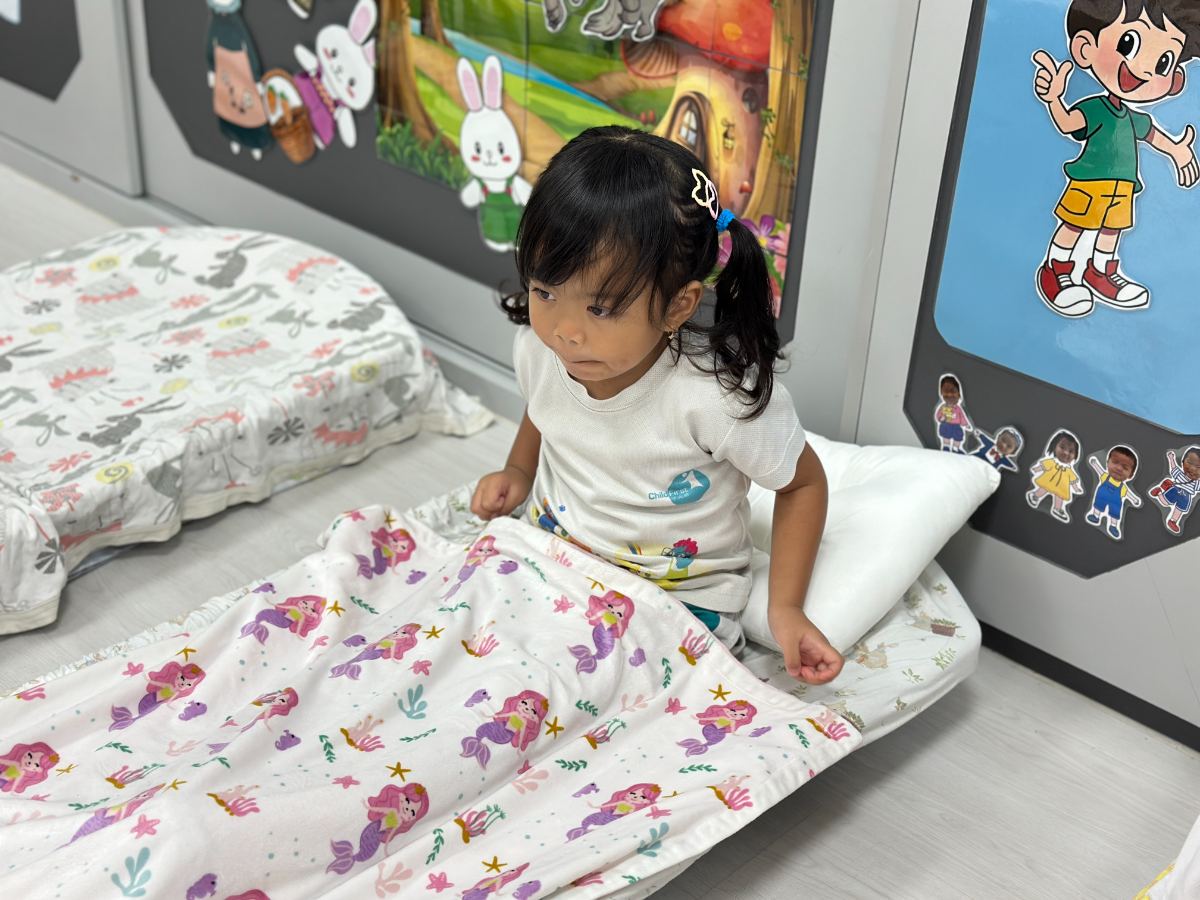
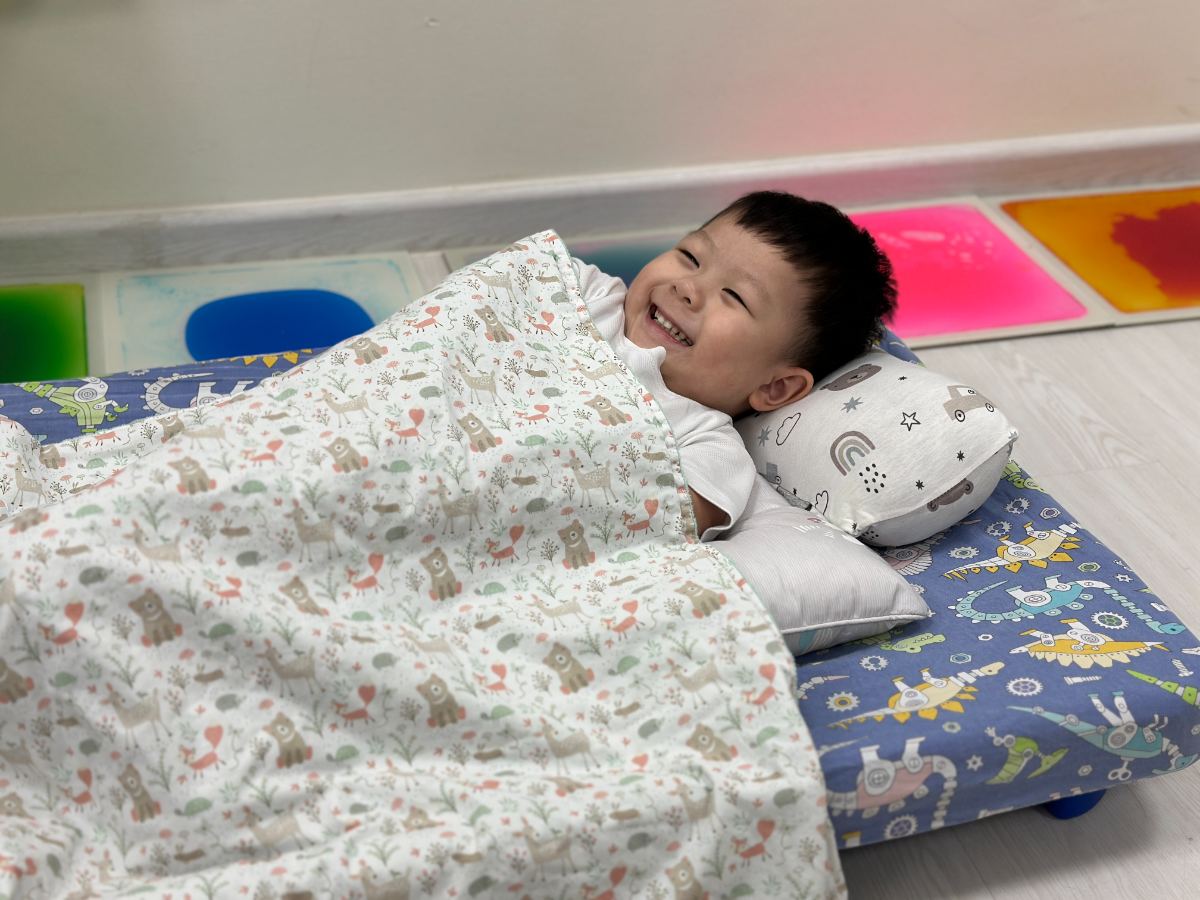
Meals, nap times, toileting and other daily activities are recorded in the ChildFirst App, with photos and updates, and a quick chat at pick-up.
“We regularly receive updates through the school’s app and during pick-up.” (Michelle L., Google review)
Regular updates on your child's daily experiences, learning and development through the parent communication app, and parent-teacher sessions to talk about progress and milestones.
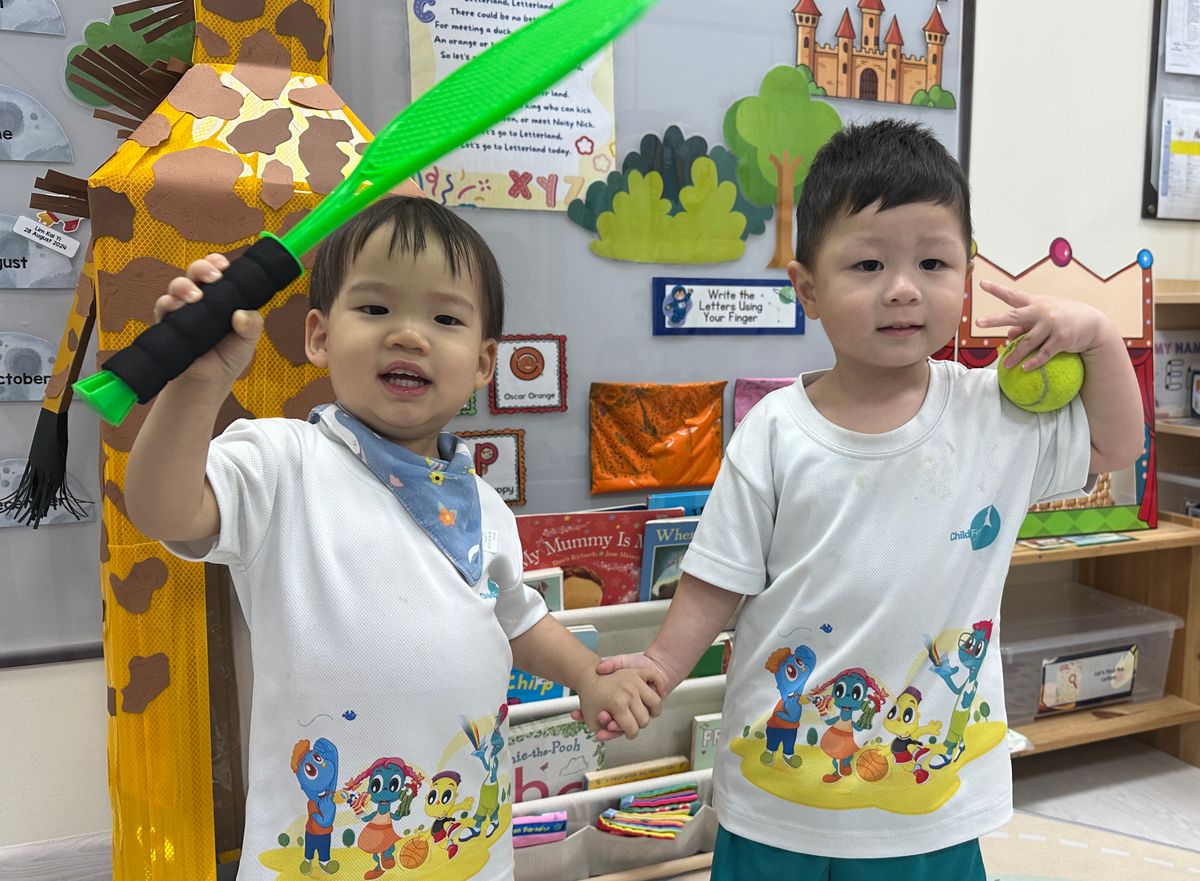
Children typically begin forming more recognisable friendships between 2 and 3 years old.
Once formed, these friendships matter, and it is not a good idea to change school, because children lose them. So it is good practice to look at the later curriculum and the school's philosophy, and to make sure they align with yours, so that you don't need to make an unnecessary school change later.
Stages in grey come later in your child’s journey. The full journey is on the curriculum page.
In the age of AI, human intelligence matters more than ever. Curiosity, judgement, wisdom and creativity are what set a child apart from AI, so we build them first, from the earliest months.
Every child is different. We develop the uniqueness of each child, discovering and nurturing their own strengths across eight intelligences, rather than measuring everyone against one standard.
The eight intelligences, including music and art (picture smart), all run from 2 months to 6 years.
Three of the most important languages in the world: English for communication, Chinese for language and culture, and AI for future readiness. English and Chinese are half a day each from 18 months, and AI joins gradually from age 3.
“My little one had quite intense separation anxiety… After two months, we’re so happy to see that he’s settled in well and is now enjoying his classes.”
“When my daughter first started Pre-Nursery, she took some time to settle in, and I’m very grateful for the teachers’ patience, warmth and encouragement, which helped her adjust quickly.”
“Seeing her transition from tears to smiles was such a joy, and we’re so grateful for Miss Jey’s efforts in making her feel safe and secure.”
A talk with the teacher before day one, shorter days in the first week, familiar teachers each morning and a photo on day one. Parents describe it in their reviews.
Yes, in our in-house kitchen at every centre. Allergies are managed.
Your child does not need to be toilet trained. Parents provide pull-up diapers every day for children who are not yet trained or are in the middle of training; diapers are not kept at school. Teachers watch for signs of readiness and work with you on a similar routine at home and in school, at your child's pace.
Nap time is from 11:45 am to 2:00 pm, in your child's own classroom on an individual cot provided by the centre. We suggest bedding measuring 150 cm × 70 cm to fit over the cot.
Please keep your child at home with a fever, vomiting, diarrhoea, a persistent cough, conjunctivitis or another infectious illness; symptom-free for 24 hours before returning. If your child becomes unwell at school, we tell you straight away and ask you to collect them within one hour.
Half the day is in Chinese, through songs, stories and play.
Toddler is screen-free.
Yes. It is one school from Pre-N to K2.
Yes. From 18 months, children spend half the day in English and half in Chinese, a bilingual start. AI is then added gradually from N1 (age 3) as the third language, so ChildFirst is bilingual first and trilingual gradually from N1.
Come and see a class in action. Planning ahead? Tell us when you would like your child to start, and we will get in touch about 5 to 6 months before.